
Table of Contents
- What Makes Expensive Graphic Apparel Actually Cost More
- Signs of High Quality Screen Printing and Embroidery
- Fast Fashion vs Premium Apparel Durability
- How to Wash Graphic Hoodies Correctly
- Brand Equity and Exclusivity in Streetwear
- Resale Value and Fashion Investment Potential
- When Premium Graphic Apparel Makes Financial Sense
- Frequently Asked Questions
Last Updated: October 2, 2026
What Makes Expensive Graphic Apparel Actually Cost More
The price difference between a $30 graphic tee and a $50 one isn't arbitrary, it reflects real differences in how the garment gets made. Understanding what drives cost separates informed buyers from those who feel ripped off at checkout.
Production costs and creative labor
Expensive graphic apparel starts with design. Original artwork, licensing fees for cultural references, and the creative labor behind compelling visuals add real money to production. A witty design that resonates with audiences requires skilled artists, not AI-generated templates.
Manufacturing overhead matters too. Quality facilities invest in better equipment, stricter quality control, and faster turnaround times than budget operations. This costs more per unit. Ring-spun cotton, the type used in Irreverent Ink's offerings like the Skull T-shirt, requires additional processing steps compared to standard cotton. The fabric gets combed to remove short fibers, creating a softer, more durable base.

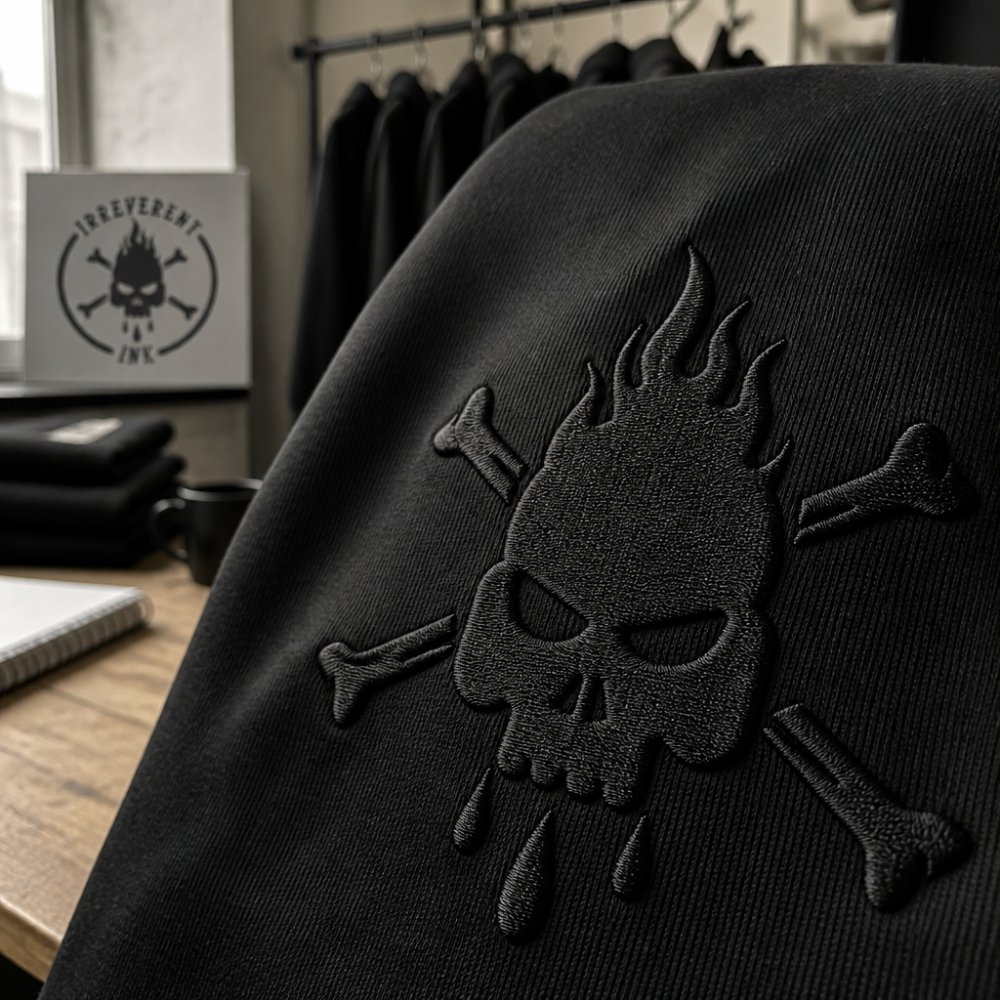
Screen printing and embroidery techniques vary wildly in cost. Direct-to-garment printing is fast but produces lower durability. Screen printing requires separate screens for each color, higher labor, but longer-lasting results. Embroidery, used on pieces like the Skull XL Logo Embroidered Hoodie, demands precision machinery and skilled operators. A single embroidered design takes longer than a printed one, which directly increases cost.

Small-batch production costs more per unit than mass manufacturing. A brand making 500 units of a design pays significantly more per piece than one churning out 50,000. This is why premium streetwear brands charge more, they're not producing at Walmart scale.
Fabric quality and garment longevity
Premium apparel uses better base materials. The difference between 4.2 oz and 5.2 oz fabric weight matters. Heavier fabric feels substantial, holds its shape longer, and resists pilling. Irreverent Ink's polo shirt uses 100% ring-spun cotton at 5.2 oz, while their t-shirts use 4.2 oz, both optimized for their intended use.
Fleece construction in hoodies determines how long the piece survives washing. An 8.5 oz mid-weight fleece with an 80/20 cotton-polyester blend (like those in Irreverent Ink's hoodies) balances warmth, durability, and comfort. Cheaper hoodies use thinner, lower-quality fleece that pills after a few washes and loses shape quickly.
Seam construction separates garments that last years from those that fall apart. Double-needle stitching on all seams, standard on Irreverent Ink pieces, creates redundancy. If one stitch line fails, the other holds. Budget brands use single-needle construction to save cents per unit. This compounds over time: a well-constructed hoodie worn 100 times costs less per wear than a cheap one worn 20 times before seams split.
Signs of High Quality Screen Printing and Embroidery
The graphic itself determines whether expensive apparel actually delivers on its promise. Visual inspection reveals whether you're buying durability or an expensive disappointment.
Print durability and thread integrity
Quality screen printing sits slightly raised on the fabric, not sunken into it. Run your finger across the design, premium prints feel smooth and even, not rough or flaking. The ink bonds to the fabric rather than sitting on top like a sticker.
Embroidery quality shows in thread tension. Stitches should sit flat and even, not bunched or loose. A well-executed embroidered design like those on Irreverent Ink's hoodies uses consistent stitch length and tight, controlled tension. Thread should not pull away from the fabric or create gaps in the design.
Color saturation matters for longevity. Cheap printing uses thin ink layers that fade quickly. Premium printing applies multiple ink passes for deeper color. After washing, quality prints maintain their appearance while budget prints show visible fading within 5-10 washes.
Identifying common defects: bacon neck and hem curling
Bacon neck describes the wavy, rippled neckline that appears after washing. It happens when the neck tape or ribbing is applied with too much tension or poor-quality material. The collar shrinks unevenly, creating that distinctive wavy pattern. Quality garments use twill neck tape, a reinforced strip that resists this deformation. Irreverent Ink hoodies include twill neck tape specifically to prevent this.
Hem curling occurs when the bottom edge of a shirt or hoodie rolls inward after washing. This usually signals that the hem wasn't properly secured or the fabric wasn't pre-shrunk. Premium brands pre-shrink fabric before cutting, so remaining shrinkage is minimal. The hem gets sewn with proper tension to resist curling.
Both defects are permanent once they appear. Buying from brands that prevent them upfront is cheaper than replacing garments that develop these issues after a few washes.
Fast Fashion vs Premium Apparel Durability
The difference between fast fashion and premium streetwear compounds with every wash cycle. This isn't about snobbery, it's about the math of longevity.
Fast fashion prioritizes getting product to market quickly and cheaply. Seams are single-stitched. Fabric is thin and prone to pilling. Dyes aren't colorfast, so prints fade noticeably after 5-10 washes. A graphic tee from a fast-fashion retailer might cost $15, but it's unwearable within a year of regular use.
Premium apparel invests in durability from the start. Better fabric resists pilling. Double-stitched seams can handle 100+ wash cycles. Quality dyes remain vibrant for years. The graphic stays intact because the printing process bonds properly to the fabric rather than sitting on the surface.
Cost-per-wear analysis over time
This is where expensive graphic apparel justifies its price. Calculate the real cost by dividing the purchase price by the number of times you'll wear it before it degrades.
A $50 premium hoodie worn twice a week for three years = 312 wears. Cost per wear: $0.16.
A $25 fast-fashion hoodie worn twice a week for six months = 52 wears. Cost per wear: $0.48.
The premium piece costs less than one-third per wear. This gap widens for items you wear frequently. Active lifestyle enthusiasts who wear graphic hoodies regularly benefit most from premium construction. The piece survives 200+ wears instead of 30.
| Item | Purchase Price | Expected Wears | Cost Per Wear |
|---|---|---|---|
| Premium hoodie | $45 | 200+ | $0.22 |
| Fast-fashion hoodie | $25 | 40 | $0.63 |
| Premium t-shirt | $30 | 150+ | $0.20 |
| Fast-fashion t-shirt | $15 | 25 | $0.60 |
How to Wash Graphic Hoodies Correctly
Even premium apparel degrades if washed improperly. The washing routine determines whether a hoodie lasts two years or five.
Protecting embroidered and printed designs
Turn the garment inside out before washing. This protects the graphic from friction against the washer drum and other fabrics. Embroidered designs are especially vulnerable to snagging and pilling when they rub against rough surfaces.
Use cold water. Hot water fades dyes and weakens fabric fibers. Cold water cleans effectively while preserving color and structural integrity. Wash with similar colors to prevent dye transfer.
Avoid bleach entirely. Even small amounts damage both the fabric and the graphic. For stains, pre-treat with mild soap and let sit for 15 minutes before washing.
Use a gentle or delicate cycle. The slower agitation reduces stress on seams and graphics. Heavy-duty cycles are unnecessary for graphic apparel and accelerate wear.
Dry flat or hang-dry instead of using the dryer.
Brand Equity and Exclusivity in Streetwear
Part of what you pay for with expensive graphic apparel is the brand itself. This isn't shallow, brand equity reflects quality consistency and cultural relevance.
Resale Value and Fashion Investment Potential
Quality graphic apparel holds resale value. This is where expensive purchases become genuine investments rather than pure expenses.
When Premium Graphic Apparel Makes Financial Sense
Expensive graphic apparel isn't the right choice for everyone. Context determines whether the premium price is justified.
Frequently Asked Questions
Why is expensive graphic apparel so much more costly than fast fashion options?
Premium graphic apparel costs more due to superior fabric composition (ring-spun cotton vs. standard cotton), better construction techniques like split-stitch embroidery, and higher creative labor invested in original designs. Fast fashion cuts corners on GSM weight, uses lower-quality thread, and mass-produces generic designs. The difference in production overhead directly affects price, but also durability and how the garment looks and feels after multiple washes.
How can you tell if a graphic tee is high quality before buying?
Look for signs of high quality screen printing: smooth ink application without cracks, consistent color saturation, and thread that sits flush against the fabric without puckering. Check fabric weight (premium options typically use 4.2-5.2 oz for tees, 8.5 oz for hoodies), examine seam construction for double-stitching, and verify fiber content. Ring-spun cotton and embroidery indicate higher quality than direct-to-garment printing on thin fabric. Read product descriptions for fabric certifications like OEKO-TEX Standard 100.
Does price actually correlate with how long a graphic design will last?
Yes. Premium apparel uses higher-quality thread, better embroidery techniques, and superior fabric that resists fading and pilling. Fast fashion vs premium apparel durability differs significantly. Cost-per-wear analysis shows that spending more upfront typically reduces long-term replacement costs.
What's the best way to wash graphic hoodies to protect the design?
Turn the hoodie inside out before washing to minimize friction on the printed or embroidered design. Use cold water, gentle cycle, and avoid bleach. Wash with similar colors to prevent dye transfer. Skip the dryer if possible; air dry instead to prevent shrinkage and heat damage to embroidery or print. For embroidered pieces, avoid aggressive agitation. This care routine preserves the garment's lifespan and keeps designs looking crisp, which is why premium apparel's construction quality matters, it withstands proper care better than thin, poorly constructed alternatives.
Is there any resale value for expensive graphic apparel?
Premium graphic apparel with strong brand equity and original designs can retain value on resale platforms, especially if the piece is well-maintained. Streetwear with cultural relevance or pieces from brands known for quality hold value longer. This resale potential can offset the higher upfront cost for buyers who rotate wardrobes regularly.